
The Link Between Skin Quality and Attractiveness, Cue by Cue
Skin quality and attractiveness are closely linked. In study after study, people rate faces with even, smooth, healthy-looking skin as more attractive, often without knowing why. In one experiment, small gains in skin evenness made faces look prettier before people even noticed the face had changed (Sun et al., 2022).
Below, we walk through the four skin cues researchers keep coming back to, what each one seems to signal, and what the studies say about men, diet and age. We don't sell skincare or treatments, so there's nothing to push here.

Does clearer skin make you more attractive?
Yes, on average, clearer and healthier-looking skin goes with higher attractiveness ratings, and the effect shows up even when face shape stays exactly the same.
In one study, researchers cut small patches of skin from the cheeks of face photos and asked people how healthy the skin looked. Those scores lined up with how attractive the whole male faces were rated, and a second test used computer-made faces and found that healthy-looking skin raised attractiveness even when face shape was held the same (Jones et al., 2004). This study is one of the results Google shows for this topic, and it's a good place to start.
Another team looked at photos of 160 men aged 10 to 70. Ratings of a small patch of cheek skin alone predicted how old, healthy and attractive each man's whole face looked (Fink et al., 2012). So clear skin is about more than spots, because even colour and smooth texture count too.
What skin quality actually means
Skin quality is how healthy, even and undamaged your skin looks to other people. A panel of 10 dermatologists and aesthetic doctors voted on it until they agreed. They decided that good skin quality means healthy, youthful-looking skin that isn't damaged, and that it can be described in any ethnicity with four cues: even tone, an even surface, firmness and glow (Goldie et al., 2021). That panel was run for Merz, a company that sells aesthetic treatments.
Clinics have also started grading skin on scales. The Skin Quality Assessment Scale, for example, scores nine things in four areas, such as pores, redness, firmness and oiliness, each from 0 to 3 (Martschin et al., 2025). A separate review grouped skin traits into three kinds: what you can see, how the skin moves and feels, and its surface shape (Humphrey et al., 2021). Both of those papers have industry authors as well, so they're best read as working definitions rather than final answers.
The 4 skin cues people respond to
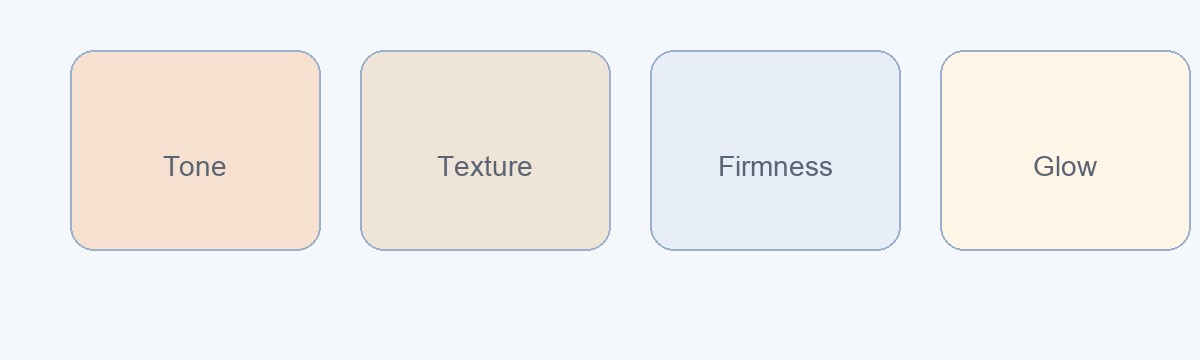
The four cues are even skin tone, smooth skin texture, firmness and skin glow. Some of them have much more research behind them than others, so we'll say how strong the evidence is for each one.
Even skin tone
Even skin tone has the strongest evidence of the four. In one study, 353 people rated cheek photos of 170 girls and women aged 11 to 76. The more even the skin colour, the more attractive, healthy and youthful the skin looked, and the younger people guessed it was (Matts et al., 2007). The first author worked for P&G, and only female skin was tested, so keep that in mind.
Even tone also seems to catch the eye. When researchers tracked where 39 people looked, faces with even, young-looking skin colour held their gaze longer, and those faces were also judged younger and rated more attractive (Fink et al., 2008). An earlier study measured texture and colour in women's faces by computer and found that men rated faces with more even skin as more attractive. In that sample, darker skin was rated most attractive, unlike some earlier studies (Fink, Grammer & Thornhill, 2001).

Smooth skin texture
Smooth skin texture changes more than just how attractive a face looks. When researchers edited only the smoothness of the skin in face images, it changed how attractive and healthy the faces seemed. It also changed how trustworthy and competent people judged them to be, which shows how much a skin surface can say about a person (Tsankova & Kappas, 2016).
The Frontiers study mentioned at the top went a step further. Across two experiments, the researchers made the skin a little more even, step by step. People judged the faces as prettier before they could tell anything had changed (Sun et al., 2022). Our reading, not a finding: that may be why good skin often comes across as a general sense that someone looks well, rather than as something people consciously notice.

Firmness
Firmness is one of the four cues in the expert consensus (Goldie et al., 2021), but it has the least direct research on attractiveness. None of the rating studies in this article tested firmness on its own. As general knowledge, firm skin looks smooth and lifted around the cheeks and jaw, while looser skin can make a face look older.
Skin glow and healthy colour
Skin glow seems to come partly from colour. When people were asked to change the skin colour of face photos so they looked as healthy as possible, they added redness, yellowness and lightness (Stephen et al., 2009). The researchers linked the redness to healthy blood flow and the yellow tones to carotenoids, the pigments found in many fruits and vegetables. The study only used photos of white faces, so it may not apply in the same way to other skin tones.
A review of the research ties these cues together. It found growing evidence that skin colour patterns and surface texture affect how attractive faces look, especially women's faces, mainly because they signal age and health (Samson, Fink & Matts, 2010).
Skin quality cues at a glance
Here's a simple chart of the four cues, what they look like and what the research links them to.
| Skin cue | What it looks like | What studies link it to | Evidence |
|---|---|---|---|
| Even skin tone | No patches, dark spots or blotchy redness | Higher ratings for attractiveness, health and youth (Matts 2007; Fink 2008) | Strong |
| Smooth skin texture | A fine surface with few visible bumps | Attractiveness and health, plus trust and competence (Tsankova 2016; Sun 2022) | Good |
| Firmness | Skin looks lifted rather than loose | One of the four expert cues (Goldie 2021) | Limited |
| Skin glow and colour | Light reflects evenly, with a slight warm tint | Looking healthier (Stephen 2009; Whitehead 2012) | Good, white faces only |
The "what it looks like" column is general knowledge. The evidence column is our own summary of how many studies back each cue.
Can diet change how attractive your skin looks?
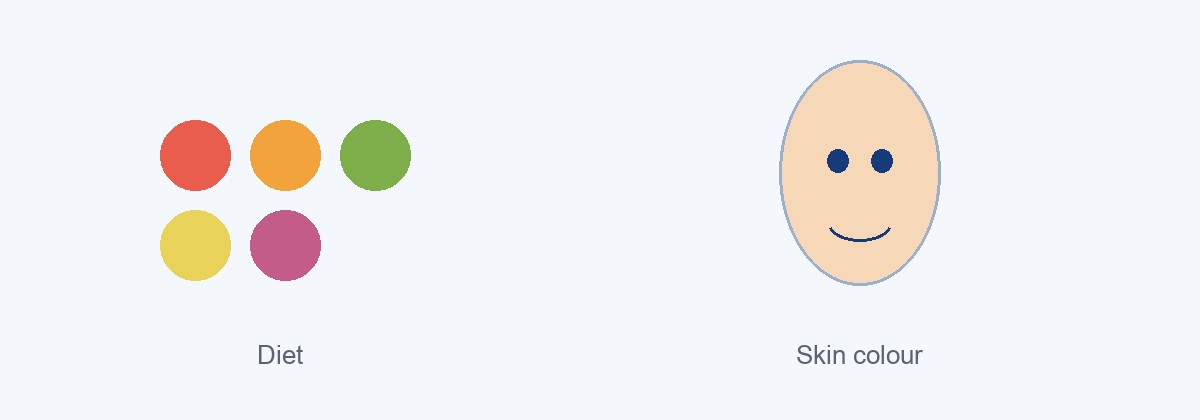
It can, a little, based on one six-week study. Researchers followed 35 people as their fruit and vegetable intake changed. Eating more of them made skin measurably redder and yellower, and an increase of about three portions a day was enough for the skin to look healthier and more attractive (Whitehead et al., 2012).
Keep the limits in mind, because the study was small, it only looked at white skin, and it was funded by Unilever. It shows that skin colour can shift with diet, but it doesn't show that any one food will make you more attractive.
Is clear skin attractive on guys?
Yes, and although most skin studies use women's faces, the ones on men point the same way.
Healthier-looking cheek skin went with more attractive male faces, even with face shape held the same (Jones et al., 2004). In the study of 160 British men, ratings of cheek skin alone predicted how old, healthy and attractive their whole faces looked. The authors said skin colour evenness in particular plays a big role in how men's faces are judged (Fink et al., 2012). So for men, clear skin seems to matter alongside the jawline and other features people usually talk about.

How skin changes with age
As skin ages, it tends to look less even, and less even skin is judged as older and less attractive. In the study of 170 girls and women, more even skin colour went with lower age guesses as well as higher attractiveness scores (Matts et al., 2007). In men, cheek skin alone was enough for raters to see older men as older, less healthy and less attractive (Fink et al., 2012).
This is general knowledge rather than a finding from these studies: tone, texture and firmness change slowly over many years, and sun exposure is one of the main reasons. That's one reason two people of the same age can look quite different.
How to check your own skin
The simplest way is to look at a clear, unfiltered photo and check the four cues one at a time. These steps are general knowledge rather than something taken from a study.
- Take a photo by a window in daylight, with no filter and no makeup.
- Look for patches of uneven colour, redness or dark spots.
- Check the texture on your cheeks and forehead, where light shows small bumps.
- Compare the left and right sides of your face.
- Take two or three photos on different days, since lighting and sleep can change a lot.
If something worries you, like a mark that changes or a rash that won't settle, a doctor or dermatologist is the right person to ask. This article isn't medical advice.