
The 1-10 Attractiveness Scale: Where Most People Land and Why
On the 1-10 attractiveness scale, 5 means average, 7 means clearly good-looking, and a true 10 is so rare that most people never meet one. In everyday use, most of us land between 4 and 7, which is exactly where the scale puts the bulk of ordinary, nice-looking people.
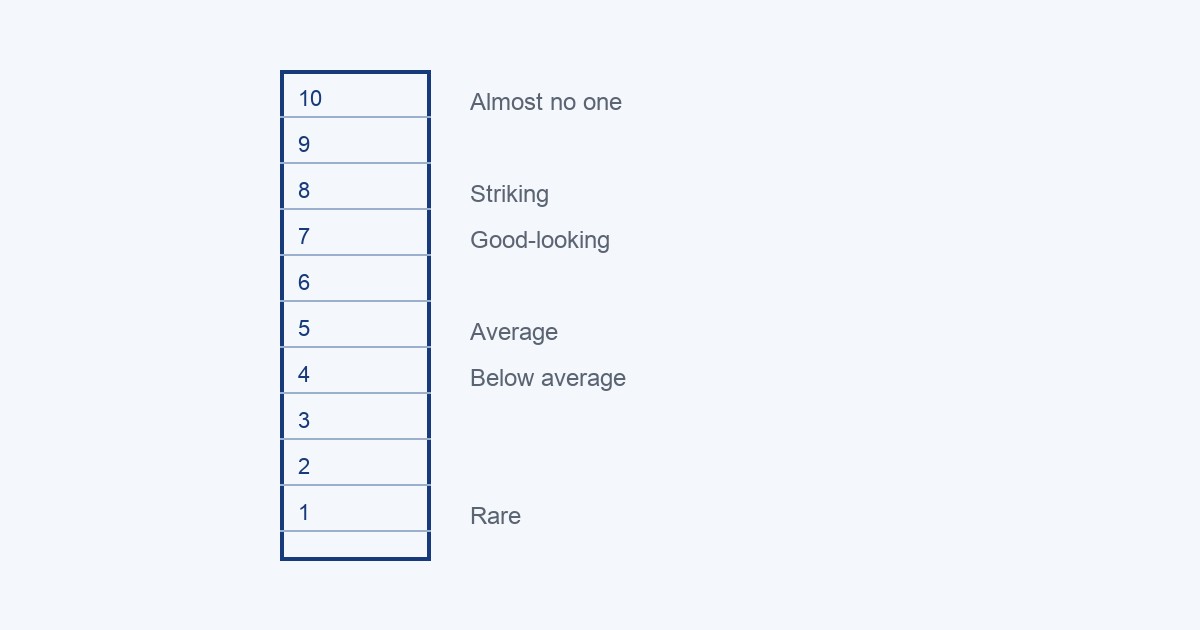
1 to 3: rare, and usually not about effort
Real 1s, 2s and 3s are uncommon. In most people's use of the scale (general knowledge), the very bottom is kept for faces affected by serious injury, illness or a medical condition. That's something no one chose, and it says nothing about who the person is.
If you feel like a 3, there's a good chance you're judging yourself from a bad photo, a harsh comment or a bad day. Those are real feelings, but they're poor measurements. Keep reading before you settle on a number.
4 and 5: the crowded middle
Is a 5 bad? Not at all. In everyday use, 5 is the most common rating (general knowledge), and it isn't an insult. It means nothing about your face stands out to a stranger in either direction. You'd blend into a crowd, which is what most faces do.
A 4 usually means one or two things pull the overall look down a little, such as tired skin, a haircut that doesn't suit you, or a flat photo. As general knowledge, this is the part of the scale where small changes help most. Better light, a fresh haircut or a relaxed smile can move someone from a 4 to a 5 or 6, because the steps here are short.
6 and 7: what good-looking means on the 1-10 attractiveness scale
A 6 is above average. People notice you're nice-looking, even if they don't stop and stare. A 7 is clearly attractive: the kind of person friends describe as good-looking without being asked.
Is a 7 good? Yes. This is the range most people secretly hope for, and a lot of people already sit in it. In casual talk, a 7 often gets treated like a C grade, as if it's just passing. It isn't. On a scale where the middle is crowded, a 7 is well above most faces.
8, 9 and the almost-impossible 10
An 8 turns heads. A 9 is model or film-star territory, and even then usually with good lighting, makeup and a professional photographer. So who counts as a 10? Honestly, a 10 is closer to an idea than a person. Ask ten people to name one and you'll get ten different answers.
That's why many people say the attractiveness scale 1-10 is really used like a 2 to 9 scale (general knowledge). The ends exist, but almost nobody lives there.
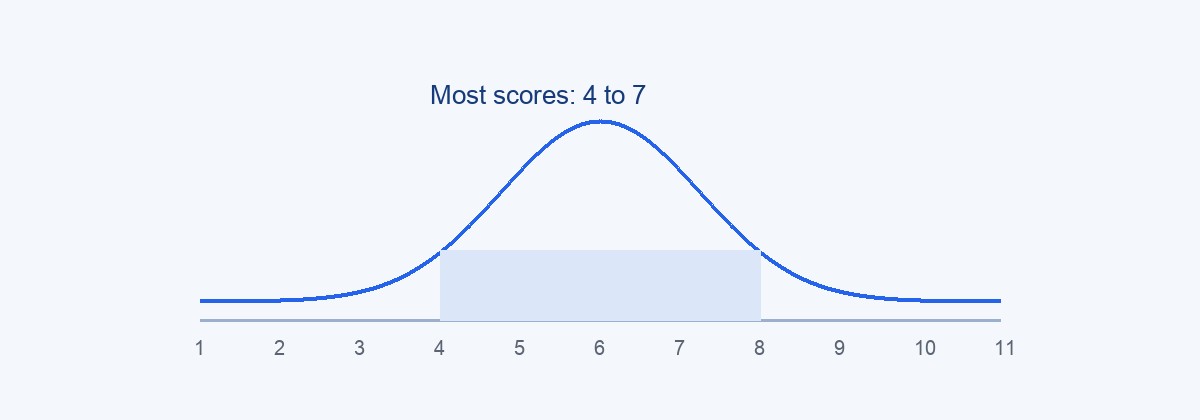
Why does the same face get a 5 and an 8?
Because a photo isn't a face, and every rater brings their own eye. The good news is that one of those two things is easy to control.
The photo changes the number
This surprises most people. When researchers gathered many real-world photos of the same people, the photos of one person varied more in attractiveness than different people did (Jenkins et al., 2011). In plain words, your best and worst photos can be further apart than you and a stranger.
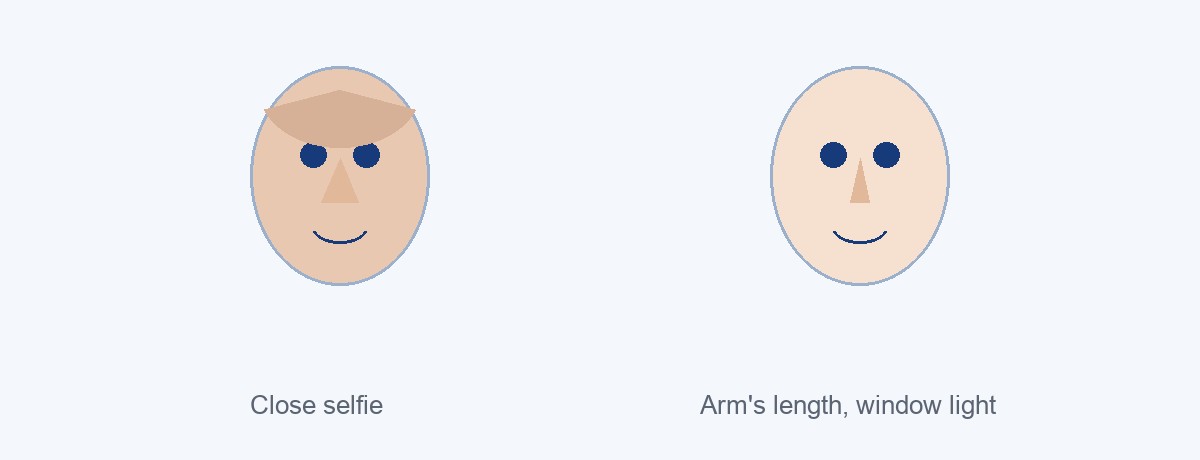
Distance matters too. A selfie taken close to the face makes the nose look bigger, and the closer the camera, the stronger the effect (Ward et al., 2018). So take your photo from arm's length or further, or ask someone else to take it.
Light does a lot of the rest. As general knowledge, soft daylight from a window flatters most faces, while overhead bulbs throw shadows under the eyes and a phone flash flattens everything. Same face, different light, different number.
Raters agree more than you think
Beauty is partly in the eye of the beholder, but less than the saying suggests. A large review that combined 11 meta-analyses found that people agree about who is and isn't attractive, both within and across cultures (Langlois et al., 2000).
The number also forms fast. In one set of experiments, judgments of attractiveness made after seeing a face for a tenth of a second closely matched judgments made with no time limit (Willis & Todorov, 2006). People decide quickly, then mostly stick with it.
That first glance colors everything else, too. Looks tend to shape what people assume about your personality, a pattern called the halo effect. We explain how it works, and where it breaks down, in our guide to the halo effect and attractiveness.
Curious which of your photos works best? Upload two different photos and compare your estimated scores out of 10. It's a quick way to see how much the photo itself moves the number.
Is the scale different for women and men?
The numbers mean the same thing for everyone: 5 is average, 7 is good-looking and 10 is almost no one. What changes is how people talk about the scale, and that's where most of the confusion comes from.
The female scale
Women's faces get rated far more often online, and often in a harsher or more sexualised way than they deserve (general knowledge). A woman who'd be called a clear 7 by people in her life might see a 5 on a forum. That gap says more about the forum than about her face.
Makeup adds another twist. It can change a rating a lot from one photo to the next, so if you're curious, compare a photo with and without it in the same light rather than reading too much into either one.
The male scale
Men's scales online tend to run cold. Videos and forums for men often treat a 5 as a failure and a 7 as rare, and they add things a face rating can't see, like height and build (general knowledge). A man who looks like a 6 to most people may get called a 4 in those spaces.
For both women and men, the most useful rating is one that's consistent: the same kind of photo, judged the same way. That's the only way to tell whether a change you make actually helps.