
A Plain-English Guide to Cheekbones and Attractiveness
Cheekbones and attractiveness are linked, but not as simply as beauty lists make it sound. In a set of studies on what women find attractive in men, men with prominent cheekbones, a large chin and a big smile were rated as more attractive (Cunningham, Barbee & Pike, 1990). Yet when 922 people ranked faces, eyebrows and the jawline mattered more than cheekbones did (Mogilski & Welling, 2018).
Below, we explain what high, low, wide, forward and hollow cheekbones look like, what research says about each one, and how to tell which type you have. We don't sell fillers, implants or surgery, so there's nothing to push here.
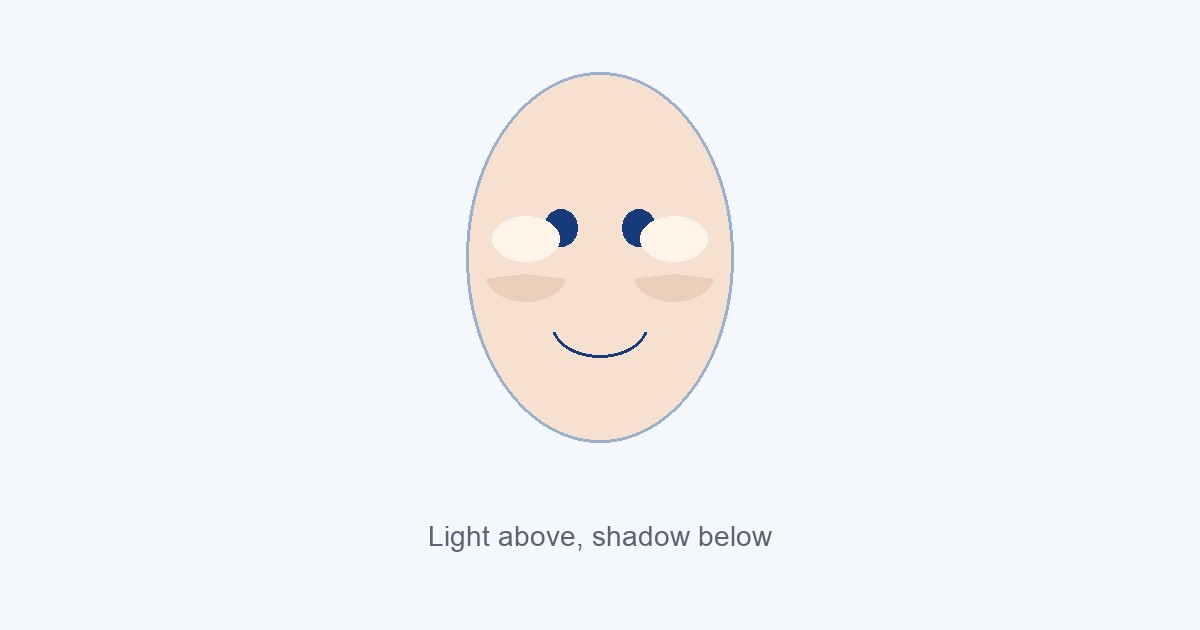
Why do people find cheekbones attractive?
Mostly because they shape how light and shadow fall on the face. High, forward cheekbones catch light on top and leave a soft shadow below, which makes a face look sculpted and defined. That part is general knowledge from photography and makeup, not a study finding.
Research adds a second reason. Psychologists count prominent cheekbones among the "mature" features of an adult face, along with a larger chin, and in men those features went with higher attractiveness ratings (Cunningham, Barbee & Pike, 1990). Some researchers also think there's a deep history behind it. One team compared face width in apes and found that male chimpanzees have wider faces than females. They noted that enlarged cheekbones are linked with attractiveness in humans and proposed that broad faces in men were shaped by mate choice (Weston et al., 2004). That idea is a theory, not a proven fact.
High vs low cheekbones: what's the difference?
The difference is where the widest, most forward part of the cheekbone sits. High cheekbones peak close to the eyes, while low cheekbones peak nearer the nose and mouth.
As general knowledge, high cheekbones tend to create a visible hollow underneath and a more angular look. Low cheekbones give a softer, rounder face, and fullness sits lower on the cheek. Neither is a flaw. The bone you're born with is mostly down to genetics.

Which type of cheekbones are attractive?
Research points to cheekbones that are neutral or slightly forward, on a face that isn't overly wide. Height gets most of the attention online, but projection and width seem to matter just as much.
High cheekbones
High cheekbones are the type most people mean when they call cheekbones attractive. The clearest support comes from men's faces, where prominent cheekbones went with higher attractiveness ratings (Cunningham, Barbee & Pike, 1990). We didn't find a study that tested height on its own in women's faces, so treat the idea that high is always best with some care.
Wide cheekbones
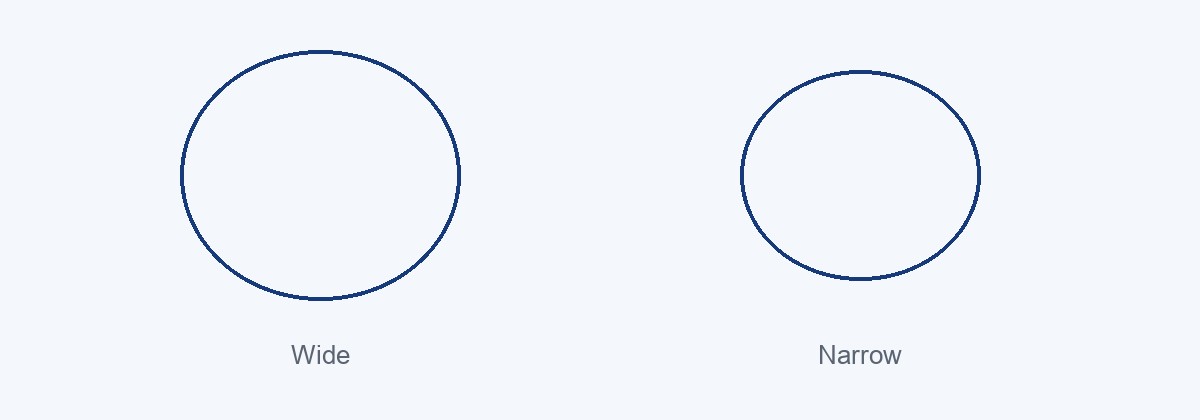
Wider isn't always better. Researchers often measure face width against the height of the upper face, called the facial width-to-height ratio. In a large review of these studies, people with wider faces were judged as more threatening and more dominant, and on average a little less attractive, especially when women did the rating (Geniole et al., 2015).
People pick up on face width very fast. In one study, judgements of aggression from men's face width held up even when the faces were shown for just 39 milliseconds (Carré, McCormick & Mondloch, 2009). So a broad face can read as strong, but that's not quite the same thing as attractive.
Forward (projected) vs flat cheekbones
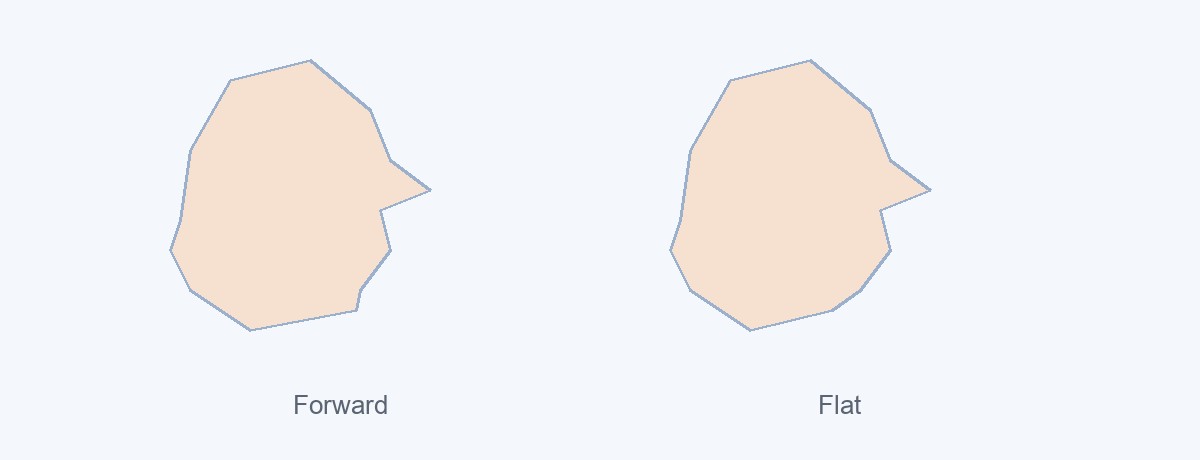
Forward cheekbones tend to look better than flat ones. When 103 dental students rated 3-D images of a young Chinese man and woman, versions with a neutral or forward cheekbone were rated more attractive than versions with the cheekbone pushed back (Woo et al., 2020).
A US study of 120 portraits found something similar for men. In young men, the angle between the cheekbone and the jaw was linked to how attractive they were rated, and the authors stressed that cheekbone measurements matter for how a face looks (Knoedler et al., 2024). Both studies were small, so they're a hint rather than a rule.
Hollow cheeks
Hollow cheeks are the dip just below the cheekbone, and none of the studies we checked tested them. As general knowledge, hollows show up more with low body fat and are common in model photos, where lighting makes them deeper. On some faces they look sharp, and on others they can make a face look tired or older.
High, low, wide, forward and hollow cheekbones at a glance
Here's a quick comparison of the five types, how to spot each one, and what the research says.
| Cheekbone type | How to spot it | How it often comes across | What research says |
|---|---|---|---|
| High | The widest point sits close to the eyes, with a shadow below | Sculpted, model-like | Prominent cheekbones rated attractive in men (Cunningham 1990) |
| Low | Fullness sits nearer the nose and mouth | Soft, rounder, youthful | No study we checked tested low cheekbones directly |
| Wide | The face looks broad across the cheeks compared with its height | Strong, dominant | Wider faces judged more dominant and slightly less attractive (Geniole 2015) |
| Forward (projected) | Cheekbones sit clearly forward in side view | Defined | Neutral or forward rated above flat (Woo 2020) |
| Hollow underneath | A dip below the cheekbone, often with low body fat | Lean, sharp | No study we checked tested hollow cheeks |
The "how to spot it" and "how it often comes across" columns are general knowledge. The last column sums up the studies in this article.
Do girls find high cheekbones attractive?
Often, yes, but it's only part of the picture. In studies built around what women want in men's faces, men with prominent cheekbones were seen as more attractive, along with big eyes, a large chin and a big smile (Cunningham, Barbee & Pike, 1990). Those same studies found that attractiveness ratings were strongly tied to who people would choose to date.
Women also seem to judge a man's face as a whole. In a Czech study, 210 women and 177 men rated 71 male faces. Men used cheekbone and jaw prominence as a cue for masculinity, while women judged masculinity in a more holistic way (Pivonkova et al., 2011). And more masculine isn't always more attractive. When researchers made faces more masculine, the male faces looked more dominant and picked up more negative traits, and slightly feminised male faces were preferred (Perrett et al., 1998). Very wide faces were also rated less attractive, especially by women (Geniole et al., 2015).

Are high cheekbones attractive on a woman?
They can be, and the research on women's faces points toward feminine, gently forward cheekbones rather than very wide ones. In a study run in Britain and Japan, faces made slightly more feminine were preferred in both countries (Perrett et al., 1998). In the 3-D study, a neutral or forward cheekbone also made the female face look more attractive (Woo et al., 2020).
Most of the studies on cheekbone height used men's faces, so there's less direct evidence for women. As general knowledge, high cheekbones on women are often linked with a heart-shaped face and a lifted look, which is why contour makeup aims for that shape.
Do cheekbones matter more than other features?
Not in the one study that tested it head to head. Researchers asked 922 people to rank faces that varied in five features: jaw, cheekbones, eyebrows, eye size and face length. For attractiveness, eyebrow thickness and jaw prominence mattered more than cheekbone prominence and eye size, and all the effects were small to moderate (Mogilski & Welling, 2018).
In plain terms, cheekbones help, but they work as part of the whole face. A strong jawline, balanced eyebrows, symmetry and a relaxed smile all add to the overall impression, and no single feature carries a face alone.
Does culture change which cheekbones look best?
A little, though people agree more than you might expect. In one study, Asian, Hispanic and white students rated the same women's photos, and their ratings matched closely (an average correlation of .93). Asian raters were somewhat less swayed by certain sexual-maturity and expressive features, and exposure to Western media didn't change the ratings (Cunningham et al., 1995).
Width is where taste differs most. Surgeons in Asia note that a wide midface and prominent cheekbones are common there, and that cheekbone reduction is one of the most frequent face-shaping operations (Zou et al., 2014). Another team writes that in East Asia, mainly oval faces are seen as attractive, so people with wide faces may seek to have part of the jaw angle or cheekbone removed (Zheng et al., 2021). So "bigger cheekbones" isn't a universal ideal.
How cheekbones change with age
Cheekbones change with age because both the bone and the soft tissue around it change. CT scans of 60 adults found that key angles of the midface bones get smaller with age in both men and women. The authors concluded that these bone changes, together with soft-tissue changes, lead to the look of an aged face (Shaw & Kahn, 2007).
As general knowledge, cheek fat also thins and shifts lower over time. That's why cheekbones can look sharper in your twenties and thirties and flatter later on, and why two people of the same age can look quite different.
How to tell if you have high cheekbones
The easiest way is a simple mirror test. It takes about a minute, and it's general knowledge rather than something taken from a study.
- Stand in front of a mirror in even light, with your hair pulled back.
- Feel for the hardest, most forward part of your cheekbone with two fingers.
- Picture a line from the corner of your nose to the top of your ear.
- If that bony point sits above the line, close to the eyes, you probably have high cheekbones. If it sits on or below the line, they're medium or low.
- Check a straight-on photo too, since mirrors and phone cameras can change how your face looks.