
Jawline Attractiveness: Does a Sharp Jaw Really Matter?
A defined jawline can make a face look more attractive, but it matters less than social media suggests. In one study of 100 people's photos, the chin was the feature most closely tied to how attractive ordinary people rated a face. Yet in another, very masculine face shapes made men look colder and less honest, not better.
This guide covers what research on jawline attractiveness really shows for men and women, what's behind the "strong jaw" idea, and what you can and can't change. We don't sell jaw gum, trainers or procedures, so you'll get the findings that don't help sell anything too.

Is a defined jawline more attractive?
Often, yes, but it's one part of a bigger picture. Studies that rate whole faces find that the lower face matters, though it rarely matters on its own.
Hongyu Ren and colleagues (2020) asked 24 ordinary people and 24 orthodontists to rate photos of 100 adults before orthodontic treatment. For the ordinary raters, the chin had the strongest link to attractiveness of any feature they scored, and it explained 45.1% of the differences in ratings. The eyes came a close second. Orthodontists saw it differently: for them, the lips mattered most, and the chin explained only 1.4%.
A second study points the other way. José Antonio Diego-Más and colleagues (2020) looked at 92 men's faces and measured how much five features (eyes, eyebrows, nose, mouth and jaw) shaped 15 different judgements. They found that the feature that matters depends on what people are judging, and that overall the eyes had the biggest effect.
So a defined jawline can help, especially in how the chin and lower face look, but it isn't the single feature that decides whether a face is attractive.
Why do people find strong jawlines attractive?
The popular answer is that a strong jaw signals testosterone and good health. Researchers have tested that idea, and the results are more mixed than most jawline blogs admit.
The testosterone and health idea
The theory goes like this. It's widely believed that testosterone helps build features such as a wider jaw and a heavier brow in men. Some scientists have suggested that these features could signal a strong immune system, which would make them attractive to a potential partner. David Perrett's team set out their 1998 study in Nature on exactly this idea: if hormone-linked features signal health, exaggerating them should make faces more attractive.
It's a neat story, and it's the one you'll see on most pages that sell jaw products. The problem is that when researchers actually test it, the results don't line up neatly.
What the studies actually show
Perrett's team made faces more masculine or more feminine and asked people in the UK and Japan to pick the most attractive version. For women's faces, people preferred the more feminine shapes, as expected. For men's faces, they also preferred slightly feminized shapes over average or masculinized ones. Making men's faces more masculine made them look more dominant, but also colder and less honest.
Other research adds more twists. Gillian Rhodes' 2006 review pooled earlier studies and concluded that averageness, symmetry and sexual dimorphism (how male- or female-typical a face looks) are all attractive in both men's and women's faces, and across cultures. But a 2025 study in Scientific Reports measured these traits in real, unedited faces and found that masculinity did not predict how attractive men's faces were rated. Averageness did, in both sexes.
Culture may matter too. Isabel Scott and colleagues (2014) tested face preferences in 12 populations with very different levels of economic development. Preferences for exaggerated masculine or feminine traits showed up only in highly developed places. That suggests the "strong jaw = good genes" link may be less universal than it sounds.

Is a strong jawline attractive on men?
Often, but stronger isn't always better. A well-defined jaw can help a man's face look attractive, yet the studies don't support the idea that the most masculine jaw always wins.
In Perrett's study, people picked slightly feminized versions of men's faces over masculinized ones, and the 2025 study found masculinity didn't predict how attractive men's faces looked. At the same time, Rhodes' review found sex-typical traits attractive in both sexes, so the honest answer is that researchers still disagree on how much masculinity helps.
What the research does suggest is a trade-off. A more masculine face can look stronger and more dominant, and that may be exactly what some people like. But the same changes can also make a face read as less warm or less trustworthy. As a general rule, a jaw that fits the rest of the face tends to look better than one that stands out on its own, though no study has measured that exact idea.
Is a defined jawline attractive on women?
Yes, but usually in a softer way than for men. Research on women's faces keeps finding that feminine face shapes are rated as more attractive.
Perrett's team found that people in both the UK and Japan preferred feminized versions of women's faces. The preference was stronger when people judged faces from their own population, which the authors took as a sign that some beauty cues are learned. The 2025 study also found that femininity predicted how attractive women's faces were rated.
None of these studies measured the jaw on its own, so they can't tell you the "perfect" female jaw angle. In plain terms, the findings point toward a jawline that fits a softer overall face shape rather than a square or heavy one. One clinic page we reviewed lists ideal jaw angles, but it also notes that studies on the female jaw vary a lot by ethnicity and region.
Which jawline shape is the most attractive?
There's no single most attractive jawline shape backed by research. The studies we checked looked at whole faces, masculinity and femininity, or the chin, not at square versus V-shaped versus round jaws.
Here's what the evidence does support. The chin and lower face can carry a lot of weight in how ordinary people judge a face. Very masculine shapes aren't always preferred in men, and feminine shapes tend to be preferred in women. Averageness, meaning how close a face is to the typical face of a group, predicted attractiveness in the 2025 study for both sexes.
Put together, the best "shape" is likely one that looks balanced with your other features. If someone online gives you a single ideal jaw angle for everyone, treat it as an opinion, not a scientific rule.
Is your jawline genetic, or can you change it?
Your jawline is largely shaped by your genes, but it's not 100% fixed. The bone underneath comes mostly from genetics, while how sharp it looks also depends on things you can partly influence.
A twin study by Dimosthenis Tsagkrasoulis and colleagues (2017) used 3D scans of 952 twins and describes the human face as a trait under strong genetic control, pointing to how strikingly alike twins look. The same paper notes that heritability numbers for specific facial traits have often been low or hard to repeat, so nobody can give you an exact percentage for the jaw.
What changes how defined your jaw looks
Fat on the face is a big one. Vinet Coetzee and colleagues (2009) found that facial adiposity, meaning how heavy a face looks, predicted how healthy and attractive people seemed. It was also linked to measures of heart health and reported infections. In general, a leaner face shows more of the jaw's outline, though that part is common knowledge rather than a finding of the study.
Other factors are general knowledge rather than findings from the studies above. Skin and tissue loosen with age, which can soften the jawline. Lighting, camera angle and how you hold your head also change how defined a jaw looks in a photo. Surgery and fillers exist too, but they're medical decisions and outside what this article covers.
Does jawline gum or jaw exercise work?
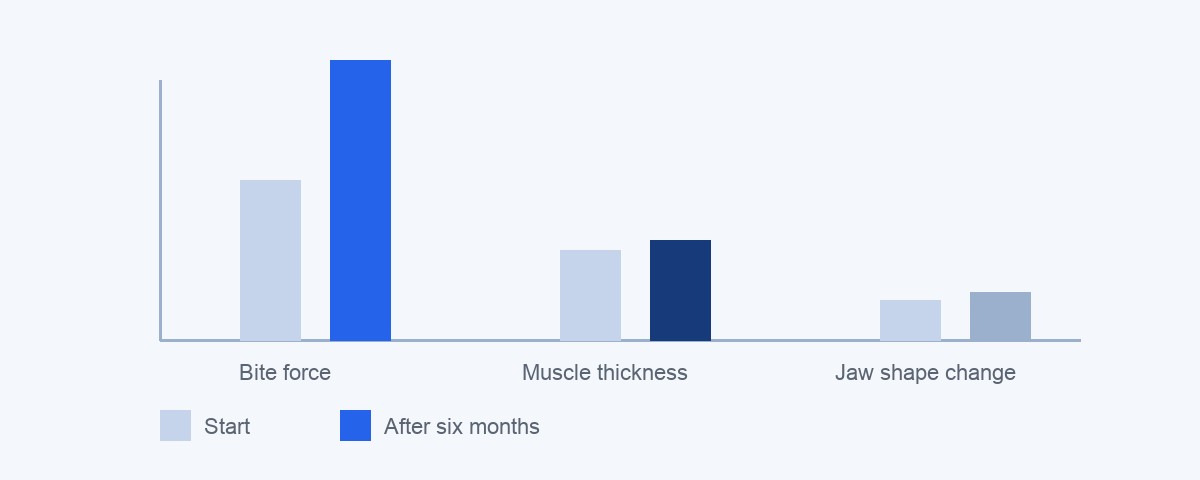
Chewing gum can make your bite stronger, but it hasn't been shown to reshape your jaw. In a randomised trial by Jung and colleagues (2024), 58 adults were split into two groups. One group chewed gum three times a day for six months, and the other did no training.
The gum group's maximum bite force rose. But their masseter muscle (the main chewing muscle at the side of the jaw) didn't get significantly thicker, and their jaw shape didn't change significantly compared with the start. That's one trial, but it's more evidence than the jaw gum blogs offer.
We didn't find a controlled study on mewing (holding your tongue against the roof of your mouth) in our checks, so we can't say whether it changes how your jaw looks. If a product promises a sharper jaw in weeks, ask to see the study behind it.
How can you check your own jawline and face balance?
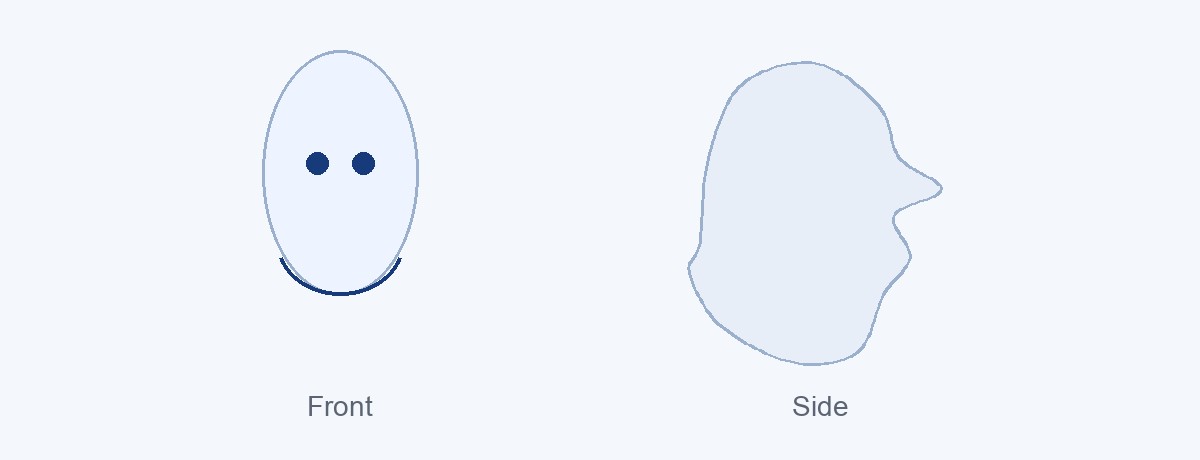
The simplest way is to look at your face as a whole, not just your jaw. Take a clear, front-facing photo in even light, with your head straight and a neutral expression, then compare it with a side photo taken the same way.
Studies suggest the jaw works together with your chin, eyes and overall face shape, so a single feature rarely tells the full story. If you'd like a quick, objective read, you can see how your facial proportions score with our free AI attractiveness test. Treat any score as a rough guide for comparing your own photos, not a final verdict on your looks.
How do the main jawline studies compare?
The studies agree that the lower face matters, but they don't agree that a bigger, more masculine jaw is always better. Here's a side-by-side view.
| Study | What they tested | What they found |
|---|---|---|
| Ren et al., 2020 | 100 adults' photos rated by 24 laypeople and 24 orthodontists | For laypeople, the chin was most tied to attractiveness (45.1% of the variation) |
| Diego-Más et al., 2020 | Eyes, brows, nose, mouth and jaw in 92 men's faces | The feature that matters depends on the judgement; overall, the eyes had the biggest effect |
| Perrett et al., 1998 | Faces made more feminine or more masculine, rated in the UK and Japan | Feminized faces were preferred for both sexes; masculinized men looked more dominant but colder and less honest |
| Rhodes, 2006 | Review and meta-analyses of earlier studies | Averageness, symmetry and sexual dimorphism were attractive in both sexes and across cultures |
| Lee et al., 2025 | Symmetry, averageness and sex-typical shape measured in real faces | Masculinity didn't predict men's attractiveness; femininity did for women; averageness did for both |
| Scott et al., 2014 | Face preferences in 12 populations | Preferences for very masculine or feminine traits appeared only in highly developed places |
| Coetzee et al., 2009 | How heavy a face looks | Facial fat predicted perceived health and attractiveness |
| Jung et al., 2024 | Gum chewing three times a day for six months | Stronger bite, but no significant change in masseter thickness or jaw shape |